
Frequently Asked Questions (FAQs) about RFA, MWA and nPulse™ Thyroid Ablation
Salt Lake City Radiofrequency Ablation Clinic
What are RFA, MWA, PEA and nPulse™?
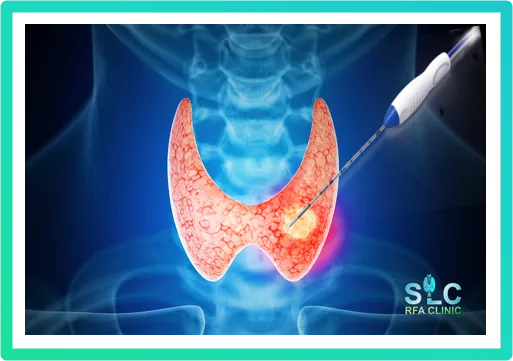
All four are ultrasound-guided, needle-based treatments that shrink thyroid nodules without surgery or a scar. Radiofrequency ablation (RFA) and microwave ablation (MWA) destroy nodule tissue with heat. Percutaneous ethanol ablation (PEA) uses a small injection of medical-grade alcohol and is the first-line treatment for fluid-filled thyroid cysts. nPulse™ uses ultrashort electrical pulses instead of heat; its use for thyroid nodules is still being studied (learn more).
How do RFA and MWA differ, and which is better?
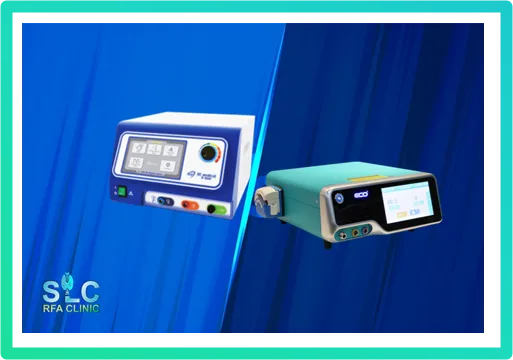
Both heat the nodule from the inside. A 2024 meta-analysis found similar nodule shrinkage with the two methods (Zufry 2024). RFA has the longest track record; MWA heats faster and is less affected by blood flow, which can help with larger or very vascular nodules. Dr. Falahati recommends the method that best fits your nodule’s size, composition and location. You will not need both.
Am I a candidate for thyroid nodule ablation?
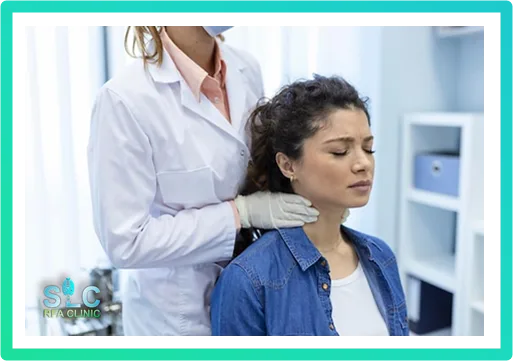
You may be a candidate if your nodule is benign on biopsy and causes neck pressure, trouble swallowing, a visible lump or cosmetic concern, or if it is an overactive (“hot”) nodule causing hyperthyroidism. For non-functioning nodules, treatment is generally considered once a nodule is about 2–3 cm or larger; there is no strict upper size limit (ATA 2023). Candidacy is confirmed at your consultation.
Do I need a biopsy first?
Yes. Before ablation, the nodule must be confirmed benign. Guidelines generally call for one benign biopsy for nodules with low-suspicion ultrasound features and two benign biopsies for intermediate-suspicion nodules (ATA 2023). If you have not had a biopsy, it can often be done at your consultation.
What happens on the day of the procedure?
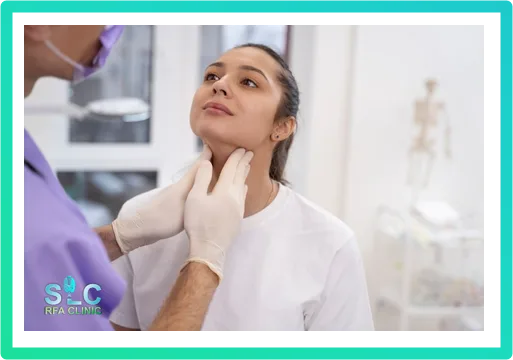
Treatment is done in our office. After the skin and the tissue around the thyroid are numbed with local anesthetic, a thin needle electrode is guided into the nodule under real-time ultrasound. Treatment usually takes about 30–60 minutes, and you go home the same day. No general anesthesia, incision or stitches are needed.
Does it hurt?
Most patients feel pressure or warmth rather than pain. Some notice brief discomfort that spreads to the jaw, ear or teeth during treatment, which eases when the energy is paused. Mild soreness or swelling for a few days is common and is usually managed with ice and over-the-counter pain relievers.
How long is recovery?
Most people return to normal activities within a day or two. We recommend avoiding strenuous exercise for about 48 hours.
How much will my nodule shrink?
Benign nodules typically shrink by about 50–80% within 12 months, with much of the change in the first several months. In a 5-year multicenter study, the reduction was generally maintained (Bernardi 2020). Pressure symptoms and appearance usually improve as the nodule shrinks. At SLC RFA Clinic, where nearly 600 ablation procedures have been performed, average volume reduction has ranged from 70% to 94% (clinic data; individual results vary).
Will I need more than one treatment?
Most nodules need one session. Very large nodules (over about 20–30 mL) are more likely to need a second treatment (ATA 2023), and some nodules regrow over the years; in long-term data, younger age, larger nodule size and lower delivered energy were linked to retreatment (Bernardi 2020). Regular follow-up ultrasounds let us find regrowth early.
What are the risks?
Serious complications are uncommon. In a meta-analysis of 2,421 patients treated with RFA, the overall complication rate was 2.38% and the major complication rate 1.35% (Chung 2017). Possible complications include temporary voice change, bleeding or bruising, skin burn and nodule rupture; most resolve without further treatment.
Will I need thyroid hormone afterward?
Usually not. Ablation targets only the nodule and spares healthy thyroid tissue, so most patients keep normal thyroid function. We check thyroid blood tests during follow-up.
How does ablation compare with surgery or radioactive iodine?
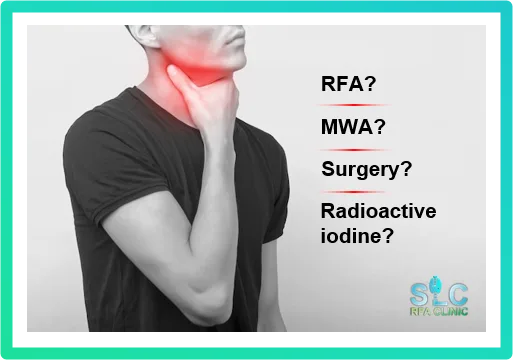
Surgery removes part or all of the thyroid and requires general anesthesia and an incision; radioactive iodine treats overactive nodules but can lead to an underactive thyroid. Ablation is done under local anesthesia, leaves no scar and preserves the rest of the thyroid. Surgery remains the better choice for suspicious or cancerous nodules (other than carefully selected low-risk cancers) and for goiters that extend into the chest.
Can ablation treat thyroid cancer?
In carefully selected patients, yes. Ablation can treat small, low-risk papillary thyroid cancers without spread as an alternative to surgery or active surveillance, following the 2024 International Expert Consensus (Zhao 2025). It can also treat small recurrences in neck lymph nodes in patients who are not candidates for repeat surgery (KSThR 2017). See Thyroid Cancer (PTMC).
What about Graves’ disease and hyperparathyroidism?
Ablation for Graves’ disease is investigational, is not FDA-approved for this indication and is not covered by insurance; early studies are promising but long-term data are limited. For primary hyperparathyroidism, surgery remains the standard treatment (AAES 2016); ablation may be considered for selected patients with a single, well-localized adenoma who are not surgical candidates (Issa 2024).
Will my insurance cover the procedure?
Since January 1, 2025, thyroid RFA has dedicated Category I CPT codes (60660 and 60661), and many plans now cover it for symptomatic benign nodules. Coverage for MWA varies more because the new codes describe radiofrequency ablation, and ablation for Graves’ disease is not covered. Our office verifies your benefits before treatment.
What follow-up will I need?
You will have follow-up neck ultrasounds to measure shrinkage, typically at about 1, 6 and 12 months and then every 6–12 months, with thyroid blood tests when needed (KSThR 2017).

How do I get started?
Call (801) 810-7892 or request a consultation online. Please have your thyroid ultrasound report, any biopsy results and recent thyroid blood tests sent to us; your doctor can fax them to (801) 747-5222.
Am I a candidate for thyroid nodule ablation?
Ablation is not right for every nodule. You may be a good candidate if:
- Your nodule has been confirmed benign by biopsy (one benign biopsy for low-suspicion ultrasound patterns; two for intermediate-suspicion patterns)
- It causes pressure, swallowing discomfort, a visible lump or cosmetic concern
- Or it is an overactive (“hot”) nodule causing hyperthyroidism
- It is mostly solid (RFA or MWA). Mostly cystic nodules are often best treated with ethanol ablation (PEA)
What to bring to your consultation
- Your thyroid ultrasound report (and images, if available)
- Biopsy (FNA) cytology reports, including any molecular testing
- Recent thyroid blood tests (TSH, free T4)
- A list of your medications, especially blood thinners
Candidacy is confirmed only after an in-person evaluation. Criteria summarized from the American Thyroid Association statement on thyroid nodule ablation (Thyroid, 2023).
Clinical guidelines & references
- Sinclair CF, Baek JH, Hands KE, et al. General principles for the safe performance, training, and adoption of ablation techniques for benign thyroid nodules: an American Thyroid Association statement. Thyroid. 2023;33(10):1150-1170. doi:10.1089/thy.2023.0281
- Papini E, Monpeyssen H, Frasoldati A, Hegedüs L. 2020 European Thyroid Association clinical practice guideline for the use of image-guided ablation in benign thyroid nodules. Eur Thyroid J. 2020;9(4):172-185. doi:10.1159/000508484
- Kim JH, Baek JH, Lim HK, et al. 2017 thyroid radiofrequency ablation guideline: Korean Society of Thyroid Radiology. Korean J Radiol. 2018;19(4):632-655. doi:10.3348/kjr.2018.19.4.632
- Chung SR, et al. Safety of radiofrequency ablation of benign thyroid nodules and recurrent thyroid cancers: a systematic review and meta-analysis. Int J Hyperthermia. 2017;33(8):920-930. doi:10.1080/02656736.2017.1337936
- Bernardi S, Giudici F, Cesareo R, et al. Five-year results of radiofrequency and laser ablation of benign thyroid nodules: a multicenter study from the Italian Minimally Invasive Treatments of the Thyroid Group. Thyroid. 2020;30(12):1759-1770. doi:10.1089/thy.2020.0202
- Zufry H, Hariyanto TI. Comparative efficacy and safety of radiofrequency ablation and microwave ablation in the treatment of benign thyroid nodules: a systematic review and meta-analysis. Korean J Radiol. 2024;25(3):301-313. doi:10.3348/kjr.2023.1004
- Zhao ZL, Wang SR, Kuo J, et al. 2024 International expert consensus on US-guided thermal ablation for T1N0M0 papillary thyroid cancer. Radiology. 2025;315(1):e240347. doi:10.1148/radiol.240347
- Wilhelm SM, Wang TS, Ruan DT, et al. The American Association of Endocrine Surgeons guidelines for definitive management of primary hyperparathyroidism. JAMA Surg. 2016;151(10):959-968. doi:10.1001/jamasurg.2016.2310
- Issa PP, Kandil E, Lee GS. Radiofrequency ablation as a treatment modality for primary hyperparathyroidism: a systematic literature review. Gland Surg. 2024;13(1):87-99. doi:10.21037/gs-22-546
For more specific concerns or to schedule a consultation, please contact our office directly. We're here to guide you on your journey to optimal thyroid health.
Request Appointment
Request a consultation with Dr. Falahati