Understanding Hyperthyroidism
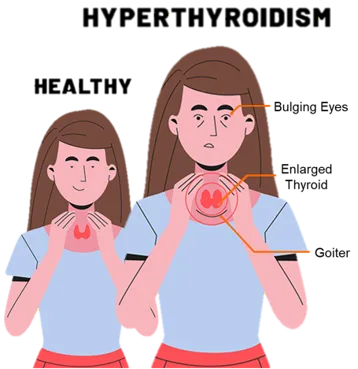
Hyperthyroidism is a condition where the thyroid gland becomes overactive, producing excessive thyroid hormone. This can lead to a myriad of symptoms, including rapid heartbeat, weight loss, increased appetite, anxiety, sweating, and more. Two of the most common causes of hyperthyroidism are:
1. Graves' Disease:
An autoimmune disorder where the body's immune system attacks the thyroid, causing it to produce more hormones than the body needs.2. Toxic Thyroid Nodule:
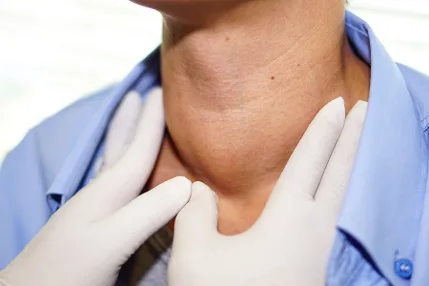
A benign (non-cancerous) lump in the thyroid gland that produces excess thyroid hormone without the usual regulatory triggers.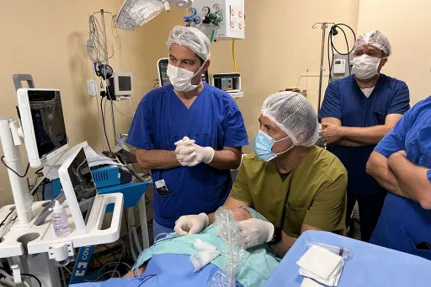
How Can RFA & MWA Help?
Radiofrequency Ablation (RFA) and Microwave Ablation (MWA) are minimally invasive procedures that utilize thermal energy to reduce the size and activity of the problematic thyroid tissue, offering a non-surgical alternative to patients.
For toxic (autonomously functioning) thyroid nodules, RFA and MWA are established treatments. For Graves' disease, thyroid ablation (RFA, MWA and nPulse™) is experimental, not FDA-approved for this indication, and not covered by insurance.
Advantages of RFA and MWA:
• Minimally invasive: No large incisions or scars.
• Quick Recovery: Most patients can return to their daily activities within a short span.
• Preservation of Thyroid Function: These techniques aim to preserve the normal thyroid tissue.
• Outpatient Procedure: No need for hospitalization.
• Durable Outcome: Long-term studies of toxic nodules show sustained volume reduction and normalization of thyroid function in most patients.
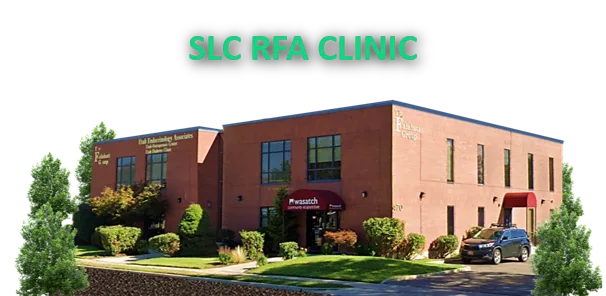
Why Choose Salt Lake City RFA Clinic?
1. Expertise of Dr. Alireza Falahati: Dr. Falahati has more than 25 years of experience in endocrinology, including 18 years performing ultrasound-guided thyroid procedures.
2. Personalized Treatment: We understand that every case is unique, and we tailor our treatments to each individual's needs.
3. On-site ultrasound and procedure suite: evaluation, biopsy and treatment are performed in our office.
4. Patient-Centric Approach: From consultation to post-treatment care, we prioritize our patients' well-being and comfort.

Schedule a Consultation
If you or a loved one is suffering from hyperthyroidism due to Graves' Disease or a toxic thyroid nodule, consider exploring RFA, MWA or nPulse™ (investigational for Graves' disease) as a potential treatment option. Contact us today to schedule a consultation with Dr. Alireza Falahati and learn more about these treatments.
Selected References: Thyroid Ablation in Graves' Disease
• Fung MHM, Lang BHH. Efficacy of single-session radiofrequency ablation (RFA) in rendering euthyroidism for persistent/relapsed Graves’ disease, a pilot study. Eur Radiol. 2023;33(9):6534–6544. doi:10.1007/s00330-023-09620-1
• The two-year results of using radiofrequency ablation as a novel treatment for persistent or relapsed Graves' disease: a prospective study. Thyroid. 2024.
• Fung MHM, et al. Health-related quality of life two years after radiofrequency ablation, surgery, or radioiodine for relapsed Graves' disease. World J Surg. 2025;49(11):3142–3151. doi:10.1002/wjs.70035
• Orloff LA, et al. Radiofrequency ablation and related ultrasound-guided ablation technologies for treatment of benign and malignant thyroid disease: an international multidisciplinary consensus statement. Head Neck. 2022;44(3):633–660. doi:10.1002/hed.26960
Toxic (autonomous) nodules: key facts
- Established options for an overactive nodule are radioactive iodine, surgery and, for suitable nodules, thermal ablation. European guidelines support ablation when surgery or radioiodine is declined or not appropriate (ETA 2020).
- Best results with smaller nodules: normal thyroid function is most likely when the overactive nodule is under about 10–12 mL; a thyroid scan confirms the nodule is “hot” before treatment (ATA 2023).
- Preserves thyroid function: unlike radioiodine or surgery, ablation targets only the nodule, so the rest of the thyroid keeps working.
Reviewed November 2026. Individual results vary; candidacy is determined at consultation.
Additional clinical guidelines
- Papini E, Monpeyssen H, Frasoldati A, Hegedüs L. 2020 European Thyroid Association clinical practice guideline for the use of image-guided ablation in benign thyroid nodules. Eur Thyroid J. 2020;9(4):172-185. doi:10.1159/000508484
- Sinclair CF, Baek JH, Hands KE, et al. General principles for the safe performance, training, and adoption of ablation techniques for benign thyroid nodules: an American Thyroid Association statement. Thyroid. 2023;33(10):1150-1170. doi:10.1089/thy.2023.0281
Is thyroid nodule ablation right for you?
Call (801) 810-7892, to discuss your options with our team.
Request Appointment
Request a consultation with Dr. Falahati